
Security paper to protect your brands
Heighten customer confidence
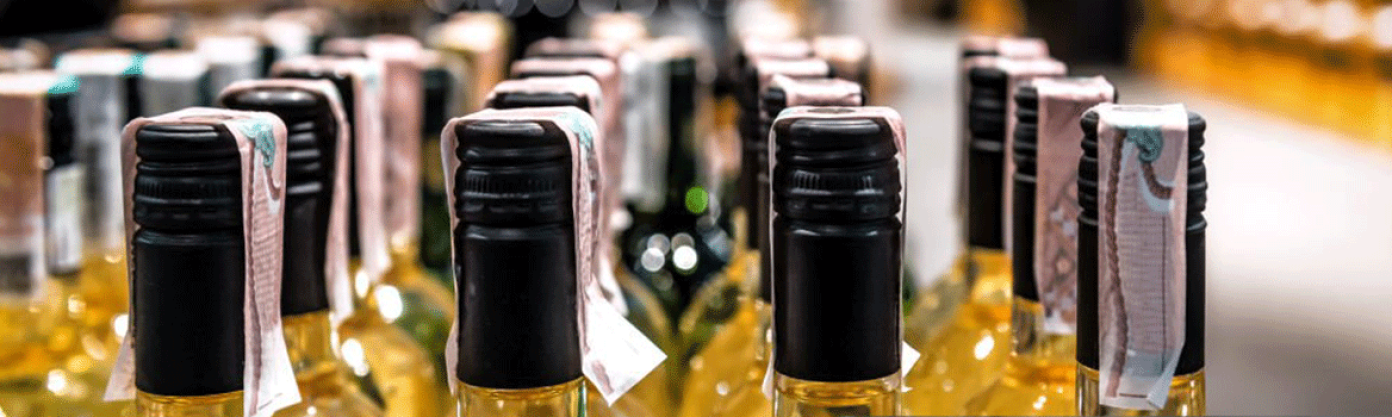
Faced with the growing threat of counterfeit goods, the pharmaceutical industry, wine & spirits producers and luxury goods manufacturers need to guarantee product authenticity. Consumers want to be sure they’re buying authentic products. At Papeteries de Vizille, we design protection solutions based on a paper substrate, adapted to each medium: paper base for secure adhesive labels, packaging, stickers, etc.
Vignettes, tax stamps, secure packaging...
Every product is unique, as are its protection requirements. Hence our customized solutions, incorporating both visible and hidden protections. These options apply to grammages from 40 to 200 g/m².
3 security levels
Bespoke security solutions
We have a range of papers with variable fiber densities, shapes and colors (visible to the naked eye or with a UV lamp). Combine the desired levels of security to customize your papers:
Level 1 security: visible to the naked eye
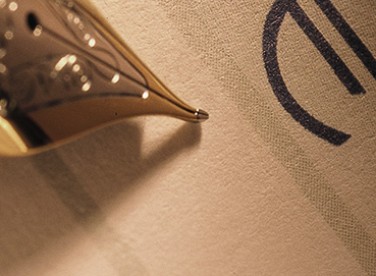
Bespoke (mono-tone, two-tone, multi-tone) or Leaf, Wave, standard watermarks, designed by Papeteries de Vizille.
Instantly visible elements integrated into the paper mass.
Level 2 security: concealed protection, revealed by a tool
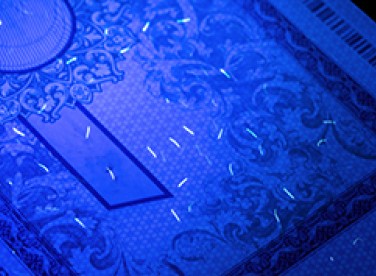
Invisible fibers calibrated in a range of colors and lengths (3 to 6 mm).
Starlites or hilites: extremely fine particles (1 mm). They are inserted into the paper during manufacture and can only be detected under a 365nm UV lamp.
Level 3 security: high protection, specialist authentication tools
- Hidden security features invisible to untrained eye, and only detectable with a specialist tool. Only authorized personnel can verify the authenticity of the substrate.
Our other areas of application
FAQ – Security Papers for Tax Stamps
A tax stamp is a high security document, designed to protect fiscal revenues and authenticate products. It cannot be reduced to a basic printed label. The security level begins with the paper itself, long before printing or converting.
A secure paper substrate is engineered to meet strict criteria:
- Virgin pulp only, ensuring purity and stability during printing and finishing.
- No optical brighteners (OBA free), so that UV reactive features remain perfectly visible.
- Security features integrated into the paper mass, making them impossible to replicate without access to industrial papermaking tools.
Papeteries de Vizille manufacture such substrates in 80–200 gsm, embedding features including:
- multi tone and custom watermarks,
- UV security fibres and starlites,
- taggants and machine detectable particles,
- and other covert or forensic protections.
Because these elements are physically built into the fibre structure, they cannot be imitated by counterfeiters — making them a core advantage of genuine security paper.
Tax stamps primarily certify that an excise duty has been paid, but in practice they serve several parallel objectives authenticating the product, simplifying enforcement controls, and supporting public-health and anti-illicit trade policies. Their physical presence on a product serves as a guarantee of authenticity, and their placement over the package opening makes them an effective tamper-evident and anti-refill seal.
In Europe, tax stamps are used mainly for spirit beverages, tobacco products, and pharmaceuticals. In many African and Asian countries, the scope is wider and may include fruit juice, bottled water, oil, sugar and food staples, and in some cases non-food products such as cement or fertilizers.
Security printers working with our substrates supply governments, tax authorities, and brand owners globally — a testament to the quality and recognition of our security papers worldwide.
Tax stamps have evolved significantly. What used to be a simple paper ticket for tax collection is now a multi layer security document combining:
overt elements visible to the consumer,
covert protections verified under controlled conditions,
and digital traceability systems such as serialized QR codes, secure databases or blockchain networks.
Our portfolio is structured around three complementary security levels:
✅ Level 1 – Overt (visible)
Includes watermarks and other features identifiable without tools. These help citizens and inspectors confirm authenticity instantly.
✅ Level 2 – Covert (UV or IR reactive)
Includes UV fibres, starlites, and other hidden elements revealed under dedicated lamps. These are used by enforcement officers, customs agents, and retailers.
✅ Level 3 – Forensic (restricted access)
These features require specialized readers and are disclosed only to authorized stakeholders. They ensure a final, non contestable verification level.
Together, these layers support compliance with the international standard ISO 22382, which defines the technical and security framework for excise tax stamps.
Depending on the sector, additional regulations apply — notably the European Tobacco Products Directive (TPD 2014/40/EU), which mandates strict authentication and track and trace measures. Other sector-specific regulations — in pharmaceuticals and spirits — follow the same logic, with standards becoming increasingly stringent across international markets.
Yes — our papers are designed for use in high‑security printing, including:
- Offset printing
- Intaglio printing
- Screen printing
They can also support holograms, UV/IR‑reactive inks, and serialized codes.
With grammages ranging from 80 to 200 gsm, our substrates work for both thin labels and thicker self‑adhesive stamp constructions.
Confidentiality is essential in security papermaking.
Details of Level 3 features are shared only with authorized individuals designated by the contracting authority. We operate under strict confidentiality agreements, and our ISO 9001 certification guarantees full batch traceability.
Custom watermarks are exclusive to each client and can only be reproduced with their formal authorization.
As excise duties rise worldwide, the face value of tax stamps increases, making them more attractive to counterfeiters.
In regions such as Africa and Asia, tax stamp programmes are expanding to new product categories like tiles, fertilizers and cement, showing strong global momentum.
Investing in a secure substrate helps:
- protect government revenues,
- safeguard brand reputation,
- and meet growing expectations for unit level authentication and traceability.